Prepare for delivery

Let's make sure the truck can get there.

A little planning before delivery day makes a big difference. Here's what to know about access, working room, overhead clearance, ground conditions, placement and door orientation before your container arrives.

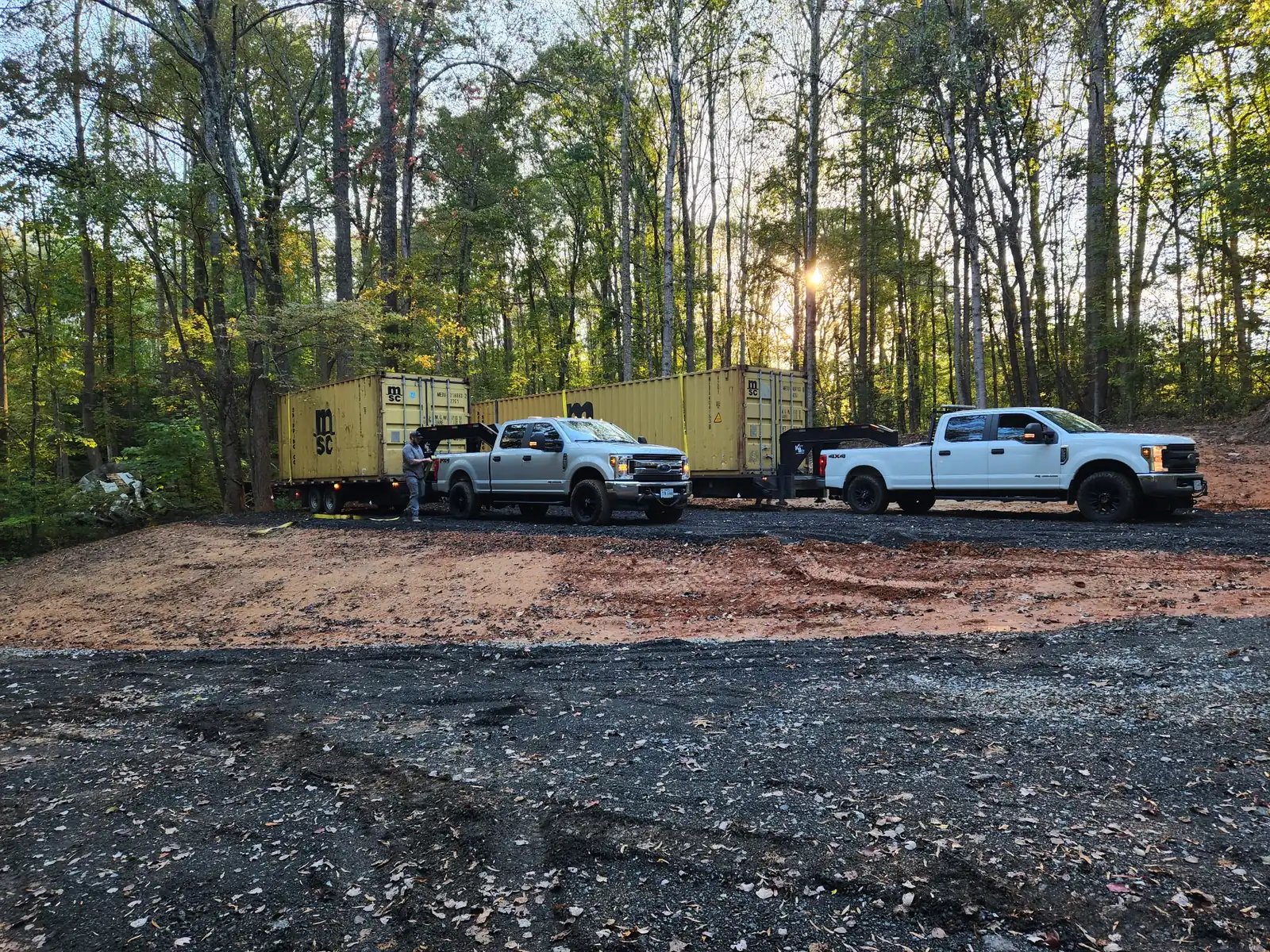
Shipping container being unloaded from a tilt-deck trailer in Central Virginia
Tilt-deck trailer · our own crew
70 ft
20 ft container

Straight-line working room for the truck and trailer.

120 ft
40 ft container

Straight-line working room for the truck and trailer.

13.5 ft
All deliveries

Approximate overhead clearance along the route.

How it arrives

We use a tilt-deck delivery system.

The container arrives on a tilt-deck trailer pulled behind a pickup. The driver backs into position, tilts the trailer, and carefully unloads the container as the truck moves forward.

01

The driver backs the trailer into position at the placement spot.

02

The deck tilts, bringing the back of the container down to the ground.

03

The truck pulls forward and the container comes off onto the ground.

04

The trailer lowers and the truck pulls clear of the container.

The container isn't the only thing that needs to fit.

The truck and trailer need enough room to approach, back into position, tilt the trailer, unload the container, and safely pull away.

20 FT CONTAINER ON THE GROUND TILT-DECK TRAILER 70 FT STRAIGHT-LINE WORKING ROOM 40 FT CONTAINER ON THE GROUND TILT-DECK TRAILER 120 FT STRAIGHT-LINE WORKING ROOM
Straight-line room, measured from where the container will sit back down the approach. Diagram is schematic — send photos and we'll tell you what your site needs.

Tell us what's along the route.

We work around plenty of these every week. Knowing about them ahead of time is what lets us plan the approach instead of improvising in your driveway.

  • Narrow gates
  • Tight entrances
  • Fences or buildings
  • Trees
  • Ditches and culverts
  • Mailboxes
  • Parked vehicles
  • Landscaping
  • Sharp turns

If anything on that list is in play, text us photos and we'll tell you how we'd handle it: (804) 822-4610

Don't forget overhead clearance.

LIMBS · WIRES · OVERHANGS 13.5 FT APPROX. CLEARANCE

We need about 13.5 ft of overhead clearance along the delivery route. Check for tree limbs, power lines, utility cables, overhangs, carports and other overhead obstacles.

Site conditions

Heavy equipment needs firm ground.

A loaded truck and trailer are heavy. Firm, reasonably level ground gives the driver the best opportunity to safely reach the placement area.

  • Watch for saturated ground or mud
  • Recently disturbed soil can be soft
  • Be cautious around soft shoulders and drainage areas
  • Steep grades can affect access

Simple test: if you wouldn't feel comfortable driving a heavy truck across it, talk with us before delivery day.

A few days of rain can change the site.

Ground that's accessible when dry may become difficult or unsafe after significant rain. If conditions change before delivery, get in touch and we'll work out the timing.

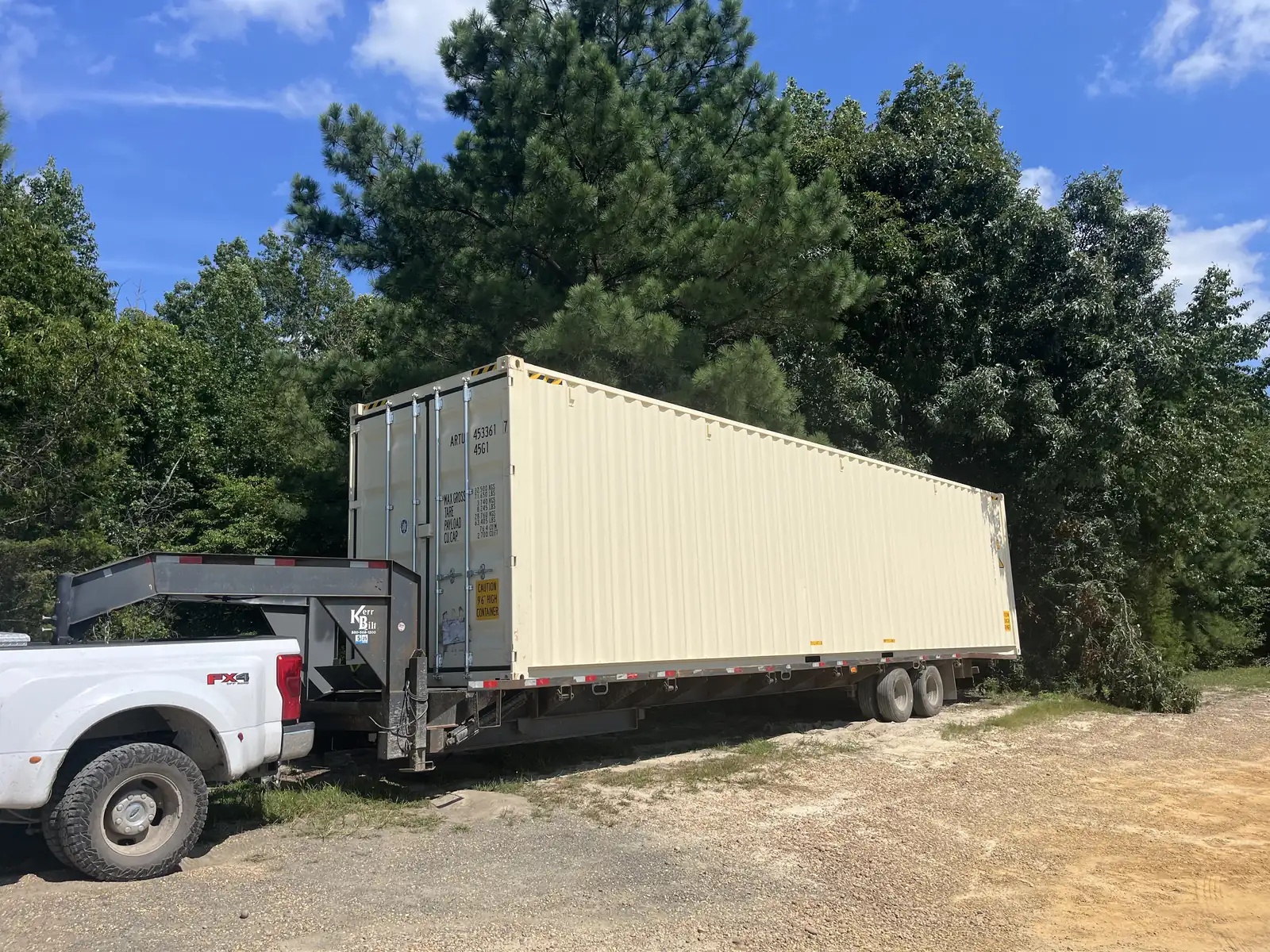
Shipping container placed on a Central Virginia property
Placement

Decide which way you want the cargo doors to face.

Decide this before delivery day. Door direction is set by the way the container is loaded at the yard, so once the truck arrives it's too late to turn them around. Think of it in terms of the truck: doors toward the truck, or doors toward the rear. Then tell us what the doors need to open onto — the driveway, your house, a barn or shop, equipment access, or another container.

CARGO DOORS TOP-DOWN VIEW TRUCK Doors toward the truck Doors end up facing back down the approach. TRUCK Doors toward the rear Doors end up facing away from the approach.

What you can set it on.

Depending on the site, a container may be supported with railroad ties, wooden blocks or solid concrete blocks. Raising the container can help with airflow underneath and reduce moisture, humidity and condensation buildup. It may also be placed directly on suitable existing ground, but is not recommended.

The doors will tell you when a container isn't sitting right.

Support and leveling are the customer's to arrange — we set the container down, we don't level it. It's worth doing well: a container sitting square keeps its cargo doors easy to operate. If the doors start binding, the base is usually the place to look.

Site preparation

What should your container sit on?

Containers can often be placed directly on firm, level ground. Some customers choose railroad ties, heavy wooden blocks, or solid concrete supports to raise the container for added airflow and reduced ground contact. Gravel is optional, not required.

The best setup depends on the ground conditions, container use, and expected weight. For permanent installations, unusual site conditions, or heavy loads, consult a qualified contractor.

Not sure about your location? Send us a few photos, and we’ll help you prepare for delivery.

TOP VIEW 40 FT 8 FT 20 FT 8 FT REINFORCED CORNER AREAS — COMMON SUPPORT LOCATIONS SIDE VIEW 20 FT SHOWN FIRM, LEVEL GROUND RAILROAD TIES, HEAVY WOOD BLOCKS, OR SOLID CONCRETE SUPPORTS RUN ACROSS THE WIDTH, NEAR EACH END

Common support locations shown for general reference only.

Delivery day

What happens when we arrive.

01

We look over the site

Have a Plan A and a Plan B for placement. The driver walks the route first — if Plan A isn't safe to reach, we go with Plan B. That call is the driver's on the day.

02

We position the trailer

We confirm the placement spot with you. Door direction was set when the container was loaded, so that part is already settled.

03

The container is unloaded

The trailer tilts and the container is carefully placed.

04

We walk through everything with you

Before we leave, we’ll confirm that you’re happy with the placement and show you how to properly open, close, secure, and care for your container doors. We’ll also answer any questions so you feel comfortable using your container from day one.

Send us photos

Not sure if the truck will fit?

Send a few photos or video before delivery and we'll tell you what we think. The most helpful images and videos are the entrance from the road, the driveway or access route, any tight turns, the final placement spot, and anything overhead.

(804) 822-4610
Send these five
  • 01Entrance from the road
  • 02Driveway or access route
  • 03Any tight turns
  • 04Final placement location
  • 05Overhead obstacles
CallTextQuote