Resources · Frequently asked questions

Shipping container questions, answered.

Whether it's your first container or your fifth, you shouldn't need to know the terminology to get a straight answer. These are the questions we hear most on the phone, with the same answers we'd give you there.

Monday–Friday, 8am–6pm. Call or text (804) 822-4610.
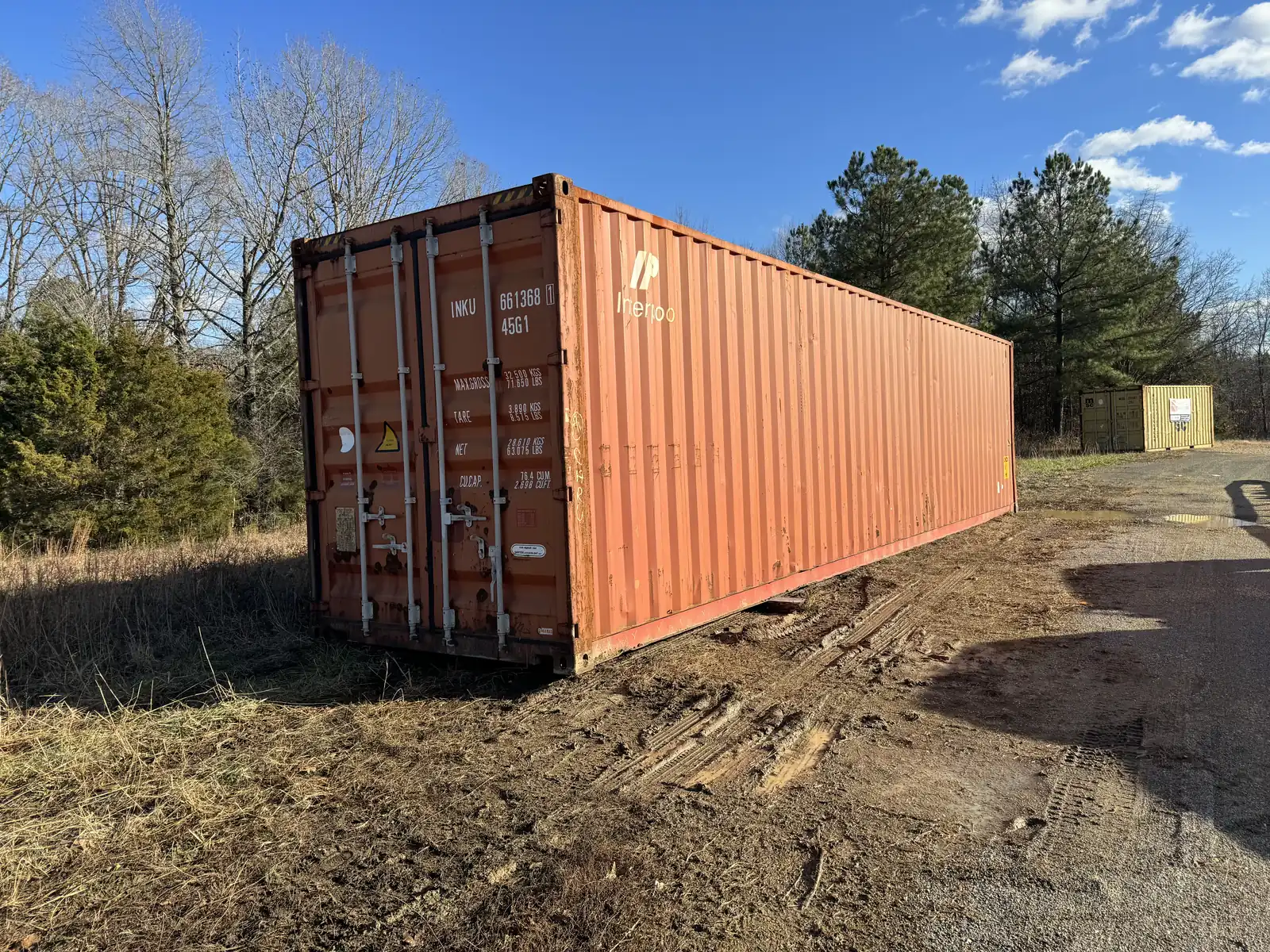
Shipping container placed on a customer's property in Central Virginia
Real answers from a local team
FAQ

The things people ask us.

More questions? See our delivery guide and container care guide, or call or text (804) 822-4610.

Choosing a container

01What size shipping container do I need?

Start with what you're storing and how much room the truck has to get in. A 20 ft container is about 160 sq ft of floor (roughly 1,170 cu ft) and fits most homes, renovations and tighter driveways. A 40 ft standard doubles the floor to about 320 sq ft (roughly 2,385 cu ft) and is the usual pick for farms, contractors and businesses. Not sure? Call or text (804) 822-4610 and we'll size it with you in a couple of minutes.

02What is the difference between a used and a one-trip container?

A used, or wind and water tight (WWT), container has been retired from cargo service. Expect dents, scratches, faded paint and surface rust. What matters is that the doors work and it stays secure and dry. A one-trip container has made a single loaded trip overseas, so it has newer paint and seals and a longer life ahead. Used is the best value when function matters more than looks. One-trip is the choice when appearance matters. Used comes with a 6-year leak warranty and one-trip with a 15-year leak warranty.

03What does wind and water tight (WWT) mean?

It means the container keeps wind and rain out: no holes, the doors close and seal, and the roof and walls are sound. It does not mean the container looks new. Cosmetic wear is normal on a WWT unit.

04What is a high cube container?

A high cube is one foot taller than a standard container: 9 ft 6 in outside instead of 8 ft 6 in, on the same 40 ft by 8 ft footprint. That adds about 300 cu ft of space for tall equipment, shelving or a build-out. High cube is also our default base for roll-up door work.

05Can I see a container before I buy it?

Yes. Our yard is at 15474 Pouncey Tract Rd in Rockville, just northwest of Richmond. Visits are by appointment, and what's on the lot changes, so tell us what you'd like to see and we'll make sure it's there.

06Do you sell 10 ft or other specialty containers?

Sometimes. We can occasionally source 10 ft containers, 20 ft high cubes, double-door units and other specialty configurations. They are made in smaller numbers, so availability is limited and they usually cost more than a standard container. Ask us what's available.

Pricing and payment

07How much does a shipping container cost?

Container prices move with the market, so the honest answer changes from week to week. The price depends on size, condition and how far it's going. We quote a delivered price, meaning the container and delivery to your address, so there's no surprise fee at the end. See today's prices in our ordering portal or call (804) 822-4610 for a delivered number.

08Why don't you list one fixed price?

Because a "starting at" price that leaves out delivery isn't a real price. Prices from the depots change, and delivery depends on your location. Our ordering portal shows current pricing, and when you enter your ZIP it shows delivery too.

09How is delivery priced?

By distance from our yard to your property. Enter your ZIP in the ordering portal to see it before you order, or call and we'll give you the complete delivered price.

10When do I pay?

If you order by phone or text, you pay on delivery day. If you check out online, you pay at checkout.

11Do you offer any discounts?

Military members, veterans, first responders and linemen get $100 off each container. Mention it when you call or text and we'll take care of it. Buying more than one? Ask us about multi-container pricing.

Delivery

12How much room does the delivery truck need?

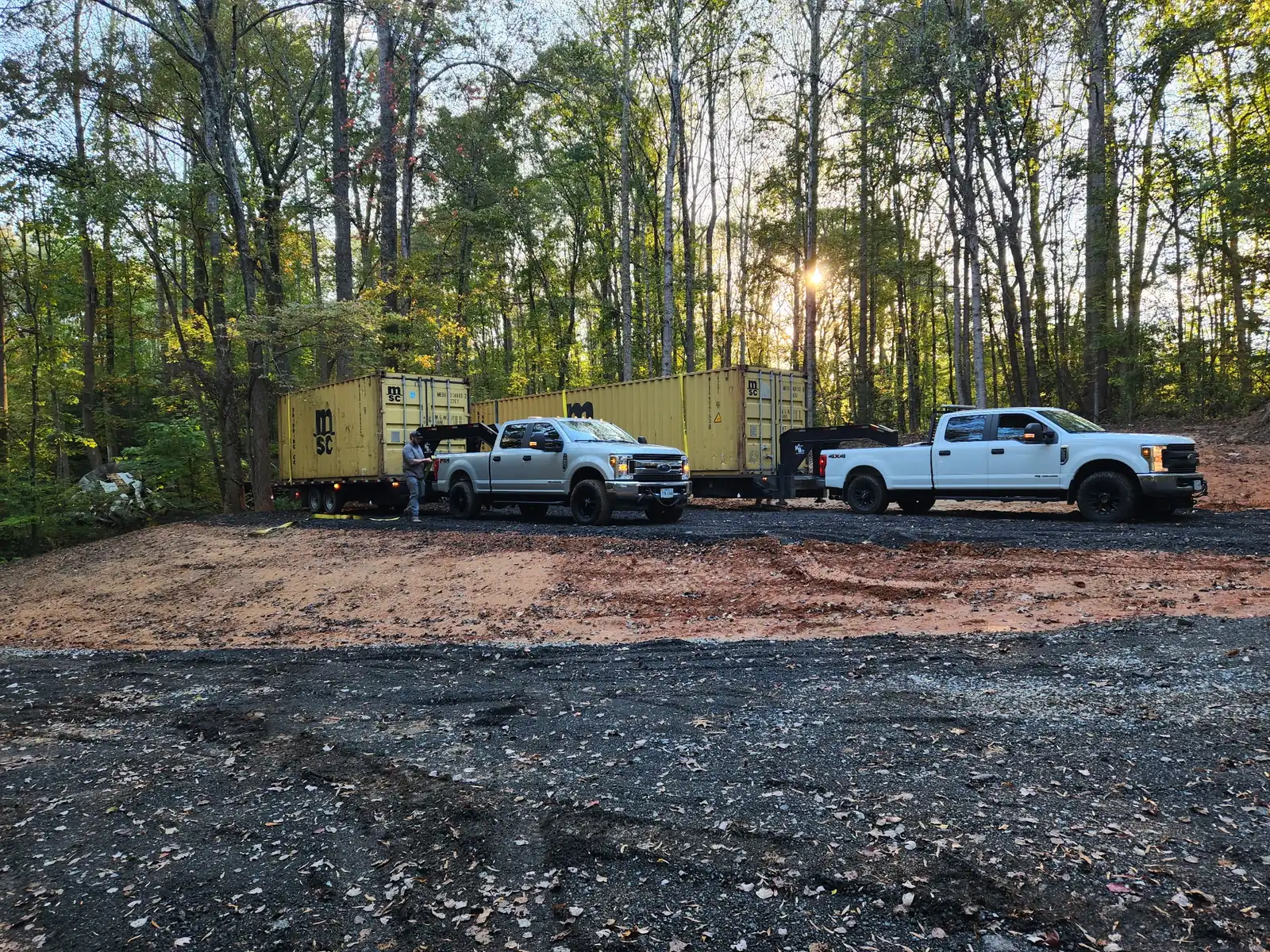
We deliver with a tilt-deck trailer pulled behind a pickup. Plan for about 70 ft of straight-line working room for a 20 ft container and about 120 ft for a 40 ft container, plus about 13.5 ft of overhead clearance along the route. The delivery guide has diagrams.

13Will the delivery truck damage my yard?

On firm, dry ground there's usually little to see afterward. Saturated ground, mud, freshly disturbed soil and soft shoulders are where ruts happen. If a few days of rain turn the site soft, get in touch and we'll move the delivery date rather than force it. Here's a simple test: if you wouldn't drive a heavy truck across it, talk to us first.

14Can you put the container exactly where I want it?

We place it as close to your preferred spot as the site safely allows. Have a Plan A and a Plan B. The driver walks the route first, and if Plan A isn't safe to reach, we go with Plan B. Texting us photos ahead of time helps avoid surprises.

15Do I need a concrete pad?

No. A container can sit on firm, level ground, and many owners raise it on railroad ties, heavy wood blocks or solid concrete blocks for airflow underneath. Gravel is optional. We set the container down, but leveling and supports are the owner's to arrange.

16Which way will the cargo doors face?

That's your call, but it has to be made before delivery day. Door direction is set by how the container is loaded at the yard: doors toward the truck or doors toward the rear. Once the truck arrives, it can't be turned around.

17Where do you deliver?

Anywhere in Virginia. Our yard is in Rockville, in Hanover County, and our own crew delivers statewide, from Northern Virginia to Southside and from the Shenandoah Valley to the coast. Call or text (804) 822-4610 with your address for a delivered price.

18Do I need a permit for a shipping container?

Rules vary by city, county and HOA in Virginia. Some localities treat a container like an accessory structure, and some neighborhoods restrict them. Check with your local zoning office, and your HOA if you have one, before delivery day.

Renting and rent-to-own

19How much does it cost to rent a shipping container?

Monthly rates are $150 for a 20 ft standard and $200 for a 40 ft standard or 40 ft high cube. To start, you pay the first month plus delivery and pickup, which depend on your location. There's a one-month minimum, and after that you can keep it as long as you need. See the Rent page.

20Can I rent to own a container?

Yes, through our partner My Container Rental. Standard containers delivered within 150 miles of our yard are $99 down, with no credit check and current terms of 12 to 48 months. We handle the container and the delivery. See rent-to-own.

Owning a container

21What does your warranty cover?

Containers we sell and deliver come with a limited leak warranty: 6 years on used/WWT and 15 years on one-trip, for the original purchaser. It covers leaks, not condensation, cosmetic wear, floors or door seals. Rentals and containers picked up directly from a depot aren't covered. Read the full warranty.

22Why is there moisture inside my container?

Usually it's condensation, not a leak. Steel heats and cools quickly, and humid Virginia air condenses on the inside. Raising the container off the ground, adding ventilation and keeping wet items out all help. Our container care guide covers it.

23Can you add doors, windows or power to a container?

Yes. We install roll-up doors, walk-through doors, windows, insulation, electrical, HVAC and paint. Tell us what you're building and we'll quote it. See modifications.

Still have a question?

Ask us. You'll get a straight answer from someone who knows containers, not a call center.

Ready when you are

Buy it or rent it. We'll deliver it.

See today's prices on 20 ft, 40 ft and high cube containers, or rent one month to month.

Before delivery day

Getting the container is one thing. Getting it onto your property is another.

See how much room the truck needs, how to prepare your site, and what to expect when your container arrives.

Prepare for Delivery
Shipping container being unloaded from a tilt-deck trailer
CallTextQuote